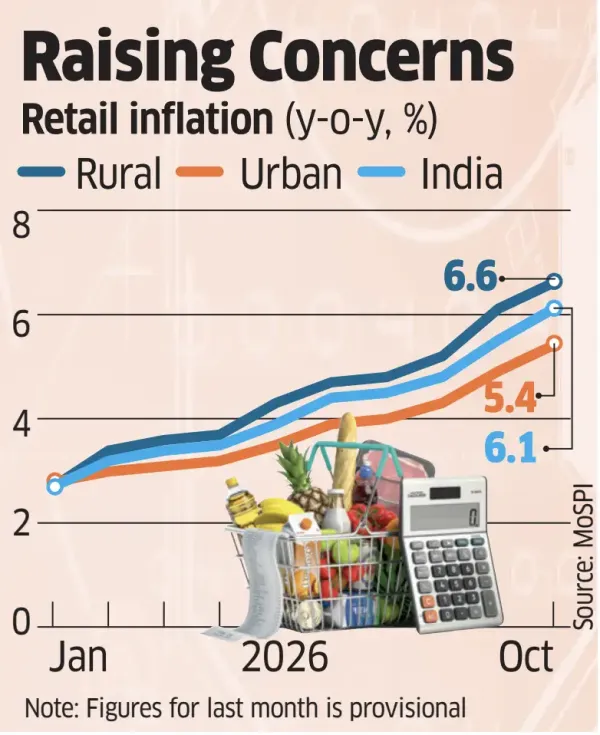
New Delhi: Retail inflation shot up to 6.09% year-on-year in October, breaching the upper tolerance limit of the Reserve Bank of India (RBI) for the first time under the new consumer price index (CPI) series, according to data released on Thursday by the ministry of statistics and programme implementation.
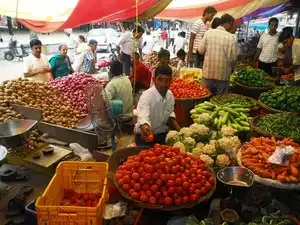
The increase was driven by a spurt in food prices.
Repo Rate Hike Expectations in Dec
This has intensified inflationary concerns and raised expectations of a 25-basis-point repo rate hike at the December monetary policy meeting. A basis point is a hundredth of a percentage point.
Inflation remained above RBI's medium-term target of 4% for the fifth consecutive month. The RBI has a tolerance band of 2 percentage points on either side of the 4% level. Retail price growth last exceeded the 6% limit in October 2024, hitting 6.2% under the old CPI series, which used 2012 as its base year.
 "The rise in inflation beyond 6% confirms the possibility of a rate increase by the RBI in December by 25 basis points," said Sakshi Gupta, principal economist at HDFC Bank.
Last month, the central bank's Monetary Policy Committee raised its policy rate by 25 basis points to 5.5%, marking the first tightening in nearly four years.
Food inflation accelerated to 8.9% year-on-year in October, up from 7.7% in September, with rural prices increasing 9.1% compared with 8.7% in urban areas.
"Food inflation under pressure from a deficient monsoon and rising global food prices, an Indian crude basket averaging $120 per barrel in October and sustained producer pricing power converged to drive a broad-based rise in consumer prices," said Dipti Deshpande, principal economist at Crisil.
Gupta attributed part of the increase to the fading base effect from the goods and services tax (GST) rate cuts implemented from September 22 last year.
The increase was driven by a spurt in food prices.
Repo Rate Hike Expectations in Dec
This has intensified inflationary concerns and raised expectations of a 25-basis-point repo rate hike at the December monetary policy meeting. A basis point is a hundredth of a percentage point.
Inflation remained above RBI's medium-term target of 4% for the fifth consecutive month. The RBI has a tolerance band of 2 percentage points on either side of the 4% level. Retail price growth last exceeded the 6% limit in October 2024, hitting 6.2% under the old CPI series, which used 2012 as its base year.
Last month, the central bank's Monetary Policy Committee raised its policy rate by 25 basis points to 5.5%, marking the first tightening in nearly four years.
Food inflation accelerated to 8.9% year-on-year in October, up from 7.7% in September, with rural prices increasing 9.1% compared with 8.7% in urban areas.
"Food inflation under pressure from a deficient monsoon and rising global food prices, an Indian crude basket averaging $120 per barrel in October and sustained producer pricing power converged to drive a broad-based rise in consumer prices," said Dipti Deshpande, principal economist at Crisil.
Gupta attributed part of the increase to the fading base effect from the goods and services tax (GST) rate cuts implemented from September 22 last year.