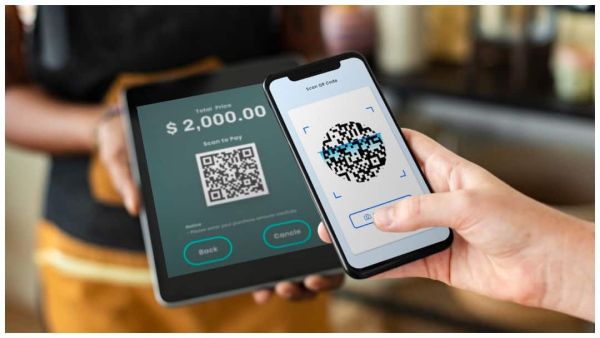
Forgot to recharge your mobile data, are in a poor-network area or simply have no internet connection on your phone when you reach the checkout counter? A new UPI feature announced by the Reserve Bank of India (RBI) could make such situations less inconvenient, at least when you are paying at a compatible physical store.
The RBI has introduced UPI Tap and Pay, which allows users to make a payment by unlocking an NFC-enabled smartphone and tapping it on an NFC-enabled point-of-sale (POS) machine.
The feature was announced by RBI Governor Sanjay Malhotra on September 10 as part of two new additions aimed at simplifying digital payments and strengthening customer support and safety.
But there is an important catch: UPI itself is not becoming completely offline. While the user's phone does not need mobile internet for the Tap and Pay transaction, the POS terminal needs an internet connection to process the payment.
How The New UPI Tap And Pay Feature Works
For users, the process is designed to be similar to making a contactless card payment.
If the smartphone supports NFC, the user can unlock the device and tap it against a compatible POS terminal. The transaction is then processed using the internet connection available on the terminal.
The facility works with different types of UPI-linked accounts, including RuPay credit cards linked to UPI.
There is also a limit on when a UPI PIN is required. For payments of up to Rs 5,000, users can complete the transaction without entering a UPI PIN. If the payment exceeds Rs 5,000, the PIN will have to be entered on the POS terminal.
For consumers, this could be particularly useful at physical outlets when mobile internet is unavailable, provided the merchant has a compatible NFC-enabled POS machine.
No Mobile Internet, But The POS Machine Still Needs Internet
The RBI's announcement does not mean consumers can now make UPI payments anywhere without an internet connection.
The distinction is that the phone does not require mobile internet for this particular payment method. The POS terminal uses its own internet connectivity to complete the transaction.
Therefore, the feature is aimed at NFC-enabled physical payment terminals rather than making every UPI transaction possible without connectivity.
RBI's Other New UPI Feature: What Is MyUPI?
The RBI has also introduced MyUPI, an AI-powered customer support platform developed by the National Payments Corporation of India (NPCI).
MyUPI is built on NPCI's FiMI Small Language Model and is intended to bring information about UPI transactions and AutoPay mandates into a single platform, across different banks and UPI apps.
The focus here is less about making a payment and more about helping users understand, manage and control their UPI activity.
Among the features included in MyUPI is a Safety Switch.
It allows users to request that UPI debit transactions be declined if they suspect that their account has been compromised.
MyUPI also includes UPI Number Delink, which allows users to stop receiving UPI payments through their mobile number.
The platform will additionally provide users with more information about beneficiaries before a payment is completed. For eligible transactions, it will support automated chargeback processing.
Another feature, Transaction Replay, will allow users to recall and repeat a previous transaction through any UPI app.
Why These UPI Changes Matter For Consumers
UPI has become a major part of India's digital payments system. NPCI said UPI accounts for 89 per cent of digital transactions.
The latest features indicate a broader focus on the payment experience, not just enabling people to transfer money, but also making payments at physical outlets more convenient and giving users greater control over their transactions.
NPCI has described MyUPI as a trust and control layer rather than simply a customer-support service. It is intended to offer round-the-clock multilingual assistance and self-service options.
The additions also follow NPCI's efforts to simplify UPI authentication. Biometric authentication for UPI was launched at GFF 2025. According to NPCI, biometric-authenticated UPI transactions crossed 6.29 billion as of August 31, 2026.
What Consumers Need To Know
For someone making a routine payment, the most immediate change is the introduction of Tap and Pay at compatible NFC-enabled POS terminals.
However, consumers should remember three things: the smartphone needs NFC capability, the POS terminal needs to support the feature and have internet connectivity, and transactions above Rs 5,000 will require a UPI PIN.
Meanwhile, MyUPI is focused on the other side of digital payments, helping users access transaction-related information and exercise greater control over their UPI activity.
Contact to : xlf550402@gmail.com
Copyright © boyuanhulian 2020 - 2023. All Right Reserved.