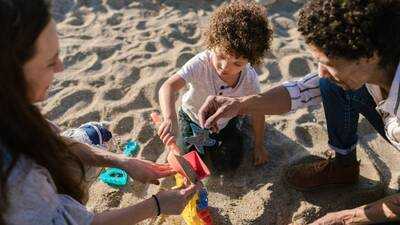
For many parents, pretending to play house with their kids or helping their child rescue an imaginary dragon may feel like harmless fun, but psychologists say these make-believe games serve a much bigger purpose than that. Research indicates that when parents take part with their children to play pretend, they are helping their kids to develop their imagination, understand other people’s thoughts and emotions, and practise social skills that might come in handy in their adult life.
A growing body of developmental, including a study titled The Significance of Parental Mentalizing for Four-Year-Old Children’s Solitary Pretend Play , published in Frontiers in Psychology, suggests that parents who actively take part in their child’s imaginative play may be helping their kids to build stronger symbolic sense and social understanding. Pretend play provides a safe space for children where they learn to interpret emotions, negotiate roles, and explore different perspectives.
Pretend play is more than just imagination for children
These games, whether children are acting as doctors, chefs, or engineers, require them to imagine a situation that is different from the reality they are living in while also keeping track of the real world. Psychologists describe this as symbolic representation, an important cognitive skill that supports language and social development. The study published in Frontiers in Psychology found that four-year-olds whose mothers demonstrated strong mentalising abilities, that is, the capacity to understand and respond to a child’s thoughts and feelings, developed more complex pretend play. Thus, researchers concluded that sensitive parental interactions may help children develop richer imaginative abilities.
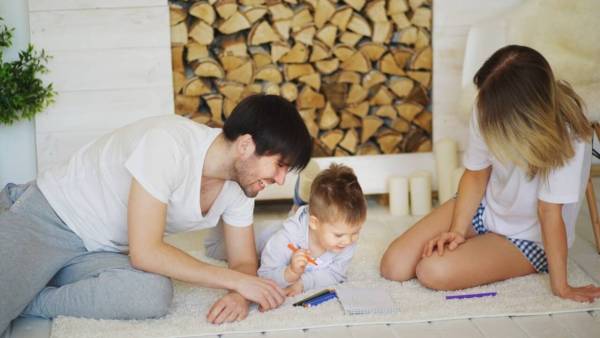
One of the reasons why these games are more valuable is because it encourages children to think out of the box and from someone else’s perspective. A review by Angeline Lillard and her colleagues, titled The Impact of Pretend Play on Children’s Development: A Review of the Evidence, found that although this does not automatically improve every developmental outcome, guided imaginative play can support skills related to Theory of Mind , that is, ability to recognise that other people might have different beliefs, desires and emotions, a skill closely related to empathy and successful social relationships. Therefore, when children pretend to be teachers, doctors, parents, or superheroes, they practise imagining how and what emotions those characters might be feeling.
Parents help children build richer imaginary worlds
The Frontiers in Psychology study showed that parents who are receptive to their children’s imaginations and respond thoughtfully tend to have kids who create more elaborate stories and narratives during independent play. Researchers believe these interactions help children organise their own thoughts and understand social situations better than their peers. Additionally, developmental psychologists say these shared moments with their parents provide them with opportunities to practice communication, negotiation, and emotional expression in a comfortable environment where their mistakes carry no real harm.
Experts say parents do not need expensive educational toys to support healthy development; even a cardboard box can become a spaceship, and a blanket can become a castle in a child’s imagination
. What matters the most is that parents engage with them in their imaginary journey by following their lead, asking questions, and by doing so, parents create opportunities for children to practise creativity, communication and perspective-taking. Thus, pretending to run a toy grocery store or rescue animals may seem like simple fun, but deeper research says that these quiet moments that occur every day in a child’s life help children develop imagination and social understanding that they will carry into school and their other relationships in adult life.
Contact to : xlf550402@gmail.com
Copyright © boyuanhulian 2020 - 2023. All Right Reserved.