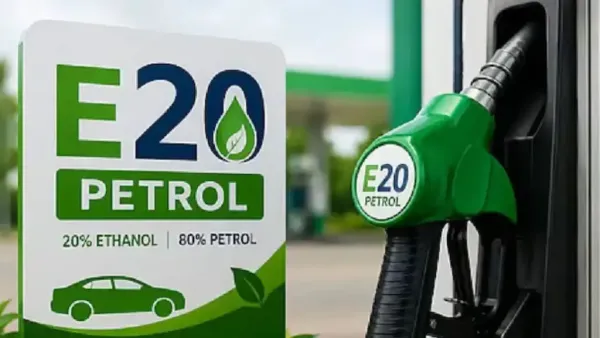
Knews Desk- Amidst the ongoing debate in the country regarding E-20 petrol, the Central Government has currently adopted a cautious stance on the plan to mix more ethanol in petrol. The government will no longer be in a hurry to implement high ethanol blended fuels like E-22 to E-30. While earlier there were preparations to rapidly promote high ethanol blending fuels, now the technical and practical aspects will be reviewed in depth keeping in mind the concerns of the people.
The Bureau of Indian Standards (BIS) has set standards for ethanol blended petrol ranging from E-22 to E-30, but the government says it is necessary to completely satisfy consumers before going ahead with the new fuel. Vehicle owners have raised questions regarding E-20 petrol regarding reduction in mileage, effect on the engine and compatibility with older vehicles.
Many types of complaints came to light from social media to common people regarding E-20 petrol. Many vehicle owners claimed that the increase in ethanol blending has reduced the mileage of vehicles and may affect the engine and other parts in the long run. However, experts of automobile companies have clarified these apprehensions and said that modern vehicles are being manufactured according to E-20 fuel. The government will now look at four key aspects before implementing high ethanol blending fuels.
Price and tax relief considerations
The government will see how much actual economic benefit consumers will get from ethanol blended petrol. Experts believe that if the benefit of relief given in excise duty reaches the customers directly, then high ethanol fuel can become cheaper than normal petrol.
Vehicle compatibility and technical changes
According to automobile experts, most of the existing vehicles are designed for E-20. Fuels such as E-22, E-25 or E-30 may require changes to the engine, fuel system and software. The government will discuss this technical aspect in detail with experts.
Concern about mileage
The energy efficiency of ethanol is different from that of petrol, due to which there is a possibility of variation in mileage. The government will take the opinion of auto companies and technical experts on this issue so that the concerns of consumers can be addressed.
Impact on agriculture and bioenergy sector
High ethanol blending is expected to benefit the sugar industry and bioenergy sector. This can increase ethanol production and create additional income opportunities for farmers. However, the government wants to move forward by striking a balance between consumer interests and industry needs.
Petrol with high ethanol blend has more amount of ethanol added than normal petrol. In future, fuels like E-22, E-25, E-27 and E-30 can be implemented in the country, but after the questions raised regarding E-20, the government will now take any step only after examining every aspect.
In this direction, the government has entrusted important responsibility to the Automotive Research Association of India (ARAI). ARAI will study the impact of high ethanol fuel on existing vehicles. In this, aspects like mileage, engine condition, maintenance expenses and vehicle performance will be examined. It is believed that only after the report of this study comes, the government will take a final decision towards implementing ethanol blended fuels beyond E-22.
Contact to : xlf550402@gmail.com
Copyright © boyuanhulian 2020 - 2023. All Right Reserved.