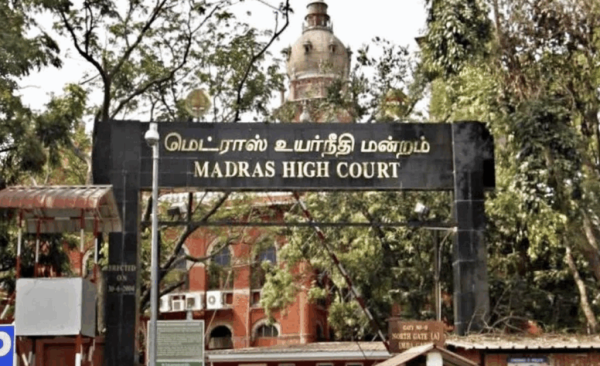
The Madras High Court has made a significant observation on the growing role of artificial intelligence in education, stating that neither ChatGPT nor any other AI tool can be equated with a qualified teacher. The court emphasised that while AI can serve as a useful learning aid, it cannot replace the knowledge, experience, judgment, and human interaction provided by trained educators.
The remarks come at a time when AI-powered tools are becoming increasingly popular among students for learning, research, assignments, and exam preparation.
Court Highlights The Importance Of Human Teachers
The High Court observed that teaching involves much more than simply providing information. A qualified teacher performs multiple roles, including mentoring, guiding, motivating, evaluating, and addressing the emotional and intellectual needs of students.
According to the court, artificial intelligence systems are designed to process and generate information based on available data, but they lack the human qualities required to understand individual students, adapt teaching methods, and foster critical thinking.
The judges stressed that education is fundamentally a human-centric process that cannot be entirely delegated to machines.
AI Can Assist, But Not Replace Educators
The court acknowledged the growing usefulness of AI tools such as ChatGPT in providing quick access to information and supporting learning activities. However, it cautioned against treating AI-generated responses as a substitute for professional teaching.
Experts have also pointed out that AI systems may occasionally produce inaccurate, incomplete, or misleading information. Without proper guidance from teachers, students may struggle to verify the accuracy and context of AI-generated content.
The court’s observations reinforce the idea that technology should complement education rather than replace educators.
Rising Use Of AI In Classrooms
The popularity of generative AI tools has increased dramatically across schools, colleges, and universities. Students frequently use AI for summarising concepts, solving problems, drafting essays, and preparing for examinations.
While educational institutions are exploring ways to integrate AI into teaching and learning processes, concerns have emerged regarding overdependence on technology, academic integrity, and the potential erosion of critical thinking skills.
The debate has prompted policymakers, educators, and regulators worldwide to consider how AI should be responsibly used in educational settings.
Human Interaction Remains Central To Learning
Education experts argue that effective teaching relies heavily on interpersonal communication, emotional intelligence, and real-time feedback. Teachers not only impart knowledge but also help students develop values, discipline, creativity, and social skills.
AI tools can support these efforts by providing additional resources and personalised learning assistance, but they currently lack the ability to replicate meaningful human relationships that are central to the educational experience.
A Balanced Approach To Technology In Education
The Madras High Court’s observation reflects a balanced perspective on the role of artificial intelligence in modern classrooms. Rather than viewing AI as a replacement for teachers, the court’s remarks suggest that technology should be used as a supplementary tool that enhances educational outcomes.
As AI continues to evolve, educational institutions are likely to focus on combining technological innovation with human expertise to create more effective and engaging learning environments.
Summary:
The Madras High Court has stated that ChatGPT and other AI tools cannot be equated with qualified teachers, emphasising that education involves mentorship, judgment, emotional intelligence, and human interaction. While AI can assist learning and provide information, the court observed that it cannot replace educators, reinforcing the need for technology to complement rather than substitute classroom teaching.
Contact to : xlf550402@gmail.com
Copyright © boyuanhulian 2020 - 2023. All Right Reserved.