According to a US survey released Monday, parents are equally divided on the appropriate age to begin discussing puberty with their children. While most parents think that discussing puberty with their children is essential, it may be difficult to choose when and how to start the discussion.
According to the University of Michigan Health C.S. Mott Children’s Hospital National Poll on Children’s Health, parents often struggle with deciding whether to start discussing physical changes and whether to explain sex.
“Many parents are shocked to discover their tween already exhibiting signs of puberty or asking unexpected questions about body changes,” said Sarah Clark, co-director of Mott Poll. “It’s easy to assume a child is too young for conversations about puberty.”
By starting the talk early, parents can assist children understand what to anticipate and help them frame the message in an age-appropriate manner, preventing confusion and anxiety.
According to Clark, children may get their knowledge from other sources, such as their peers, social media, or television, if parents do not facilitate these conversations.
In terms of preparing their tweens for this significant developmental period, parents surveyed expressed a variety of strategies, concerns, and gaps.
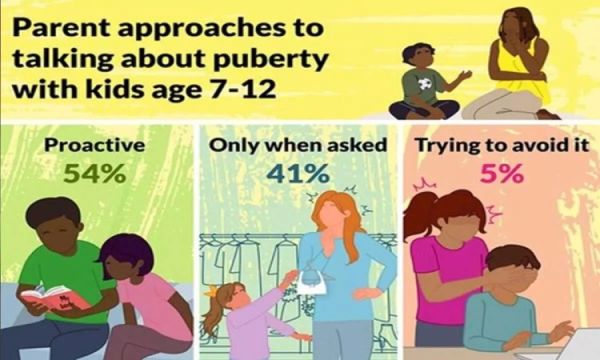
Two out of five parents say they only discuss puberty with their children when they are asked to, while around half of parents say they take a proactive approach to the topic. An another 5% steer clear of the discussion entirely.
Additionally, one in five parents were concerned about embarrassment, and one in six were afraid about speaking the incorrect thing about the topic.
According to the poll, a quarter of parents of children aged 10 to 12 say their kid doesn’t want to discuss puberty, and almost a third of parents of children aged 7 to 9 think their child is too young to comprehend.
According to Clark, parents’ own experiences may be somewhat to blame for their reluctance to bring up this topic.
“Parents may incorporate their personal experiences into their parenting style whether they are aware of it or not,” Clark said. Many parents said that while their children were young, they seldom or never spoke about puberty. It may be more difficult to know where to start if puberty was seen as an unpleasant or humiliating topic throughout childhood.
Whether, when, and how much to discuss sex and reproduction was another issue that many parents faced.
Making children aware that they will go through emotional and physical changes and telling them that these changes are normal should be the main topics of early interactions. Over time, sex-related conversations might take place, Clark said.
Additionally, a lot of parents say that their kid has enquired about their own body, their parent’s body, or other issues pertaining to puberty.
“Continuous, encouraging conversations are also essential as kids mature and experience new stages of puberty,” she said.